
Uber and Lyft Accident Claims in Coral Springs: A Complete Guide
Rideshare services have changed the way people move around Coral Springs and Broward County. Whether you are heading to Fort Lauderdale-Hollywood International Airport, returning from a night out in Coconut Creek, or using a rideshare to get to a medical appointment, Uber and Lyft have become everyday transportation. And with that expanded use comes an expanded risk of accidents.
Rideshare accidents are not like typical car crashes. They involve layered insurance systems, corporate liability structures, and fact-specific coverage rules that determine which policy applies — and for how much — based on what the driver was doing at the moment of the crash. If you were injured as a passenger, a pedestrian, a cyclist, or the driver of another vehicle, the insurance picture is more complicated than it appears from the outside.
This guide explains how rideshare accident claims work in Florida, what insurance coverage applies under different circumstances, and what steps you should take if you are injured in a collision involving an Uber or Lyft driver in Coral Springs or anywhere in Broward County.
The Layered Insurance Framework for Rideshare Accidents
Uber and Lyft both maintain commercial insurance policies for their drivers, but the coverage that applies to a given accident depends entirely on the driver’s status in the app at the time of the crash. There are three distinct phases, and each phase carries different coverage implications.
- Phase 1 — App off: When the driver is not logged into the rideshare app, they are operating as a private individual. Only their personal auto insurance applies. Uber and Lyft’s commercial coverage does not apply at all.
- Phase 2 — App on, waiting for a ride request: The driver is logged in and available but has not yet accepted a trip. During this phase, both Uber and Lyft provide limited contingent liability coverage — it applies if the driver’s personal policy does not cover the loss. This phase provides less coverage than the active-trip phase.
- Phase 3 — Active trip: The driver has accepted a ride request and is either en route to pick up the passenger or is actively transporting a passenger. During this phase, Uber and Lyft each maintain significant commercial liability coverage — $1 million in third-party liability coverage applies in this phase under both companies’ standard policies.
For passengers in the vehicle at the time of a crash, Phase 3 applies and the full commercial liability coverage is available. But establishing which phase the driver was in requires documentation — which is why preserving evidence immediately after a rideshare accident is essential.
Screenshot the App — Immediately
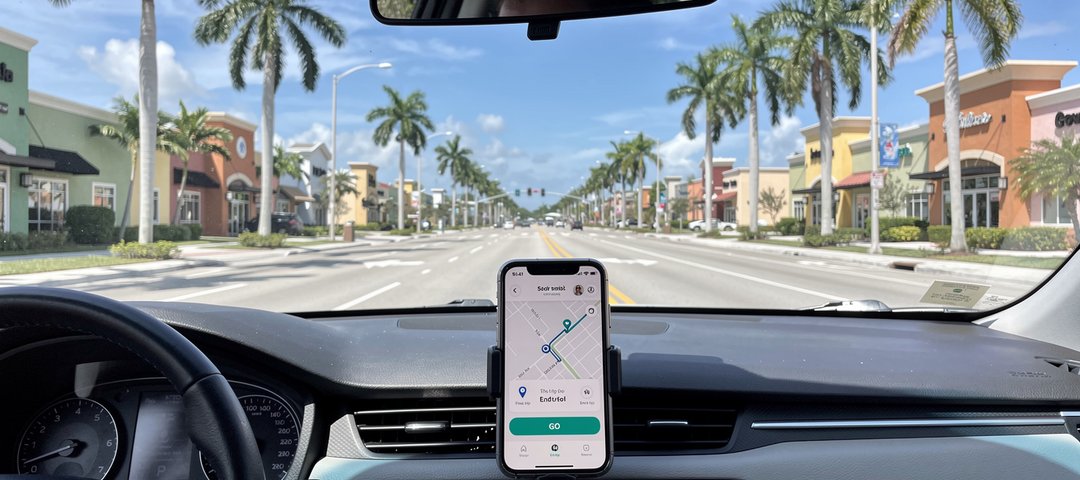
One of the most important pieces of evidence in a rideshare claim costs you nothing but a few seconds. Before you exit the vehicle — or as soon as you are safe — take a screenshot of the rideshare app on your phone. That screenshot documents:
- Trip status: Whether you had an active trip booking at the time of the crash.
- Driver information: The driver’s name, vehicle information, and rating as displayed in the app.
- Trip details: The route, pickup and drop-off locations, and timestamps that correspond to the ride.
Timestamped, this documentation is far more reliable than memory. It may be the clearest evidence of the driver’s status at the moment of impact — the single most important fact in determining which insurance policy applies.
PIP Applies to Rideshare Accident Victims
Florida’s no-fault Personal Injury Protection (PIP) system applies to rideshare accident injuries the same way it applies to other auto accident injuries. As a passenger injured in a rideshare vehicle, your own PIP coverage — through your personal auto insurance policy — is generally the first source of medical expense coverage, regardless of who caused the crash.
Florida requires a minimum of $10,000 in PIP coverage. As with any auto accident, you must seek medical treatment within 14 days of the crash to access your PIP benefits. Missing this deadline forfeits your right to those benefits regardless of how seriously you were injured.
If you do not own a vehicle and do not have your own auto insurance policy, the PIP analysis may differ. This is one of many reasons that consulting an attorney quickly after a rideshare accident is important — to identify every available source of coverage and act within each policy’s deadlines.
Why Rideshare Claims Are More Complex Than Standard Car Accidents
Even when liability appears straightforward, rideshare accident claims involve layers of complexity that standard car accident claims do not.
- Multiple parties: A typical car accident involves two drivers and two insurance companies. A rideshare accident may involve the driver’s personal insurer, Uber or Lyft’s commercial insurer, your own PIP insurer, and potentially other insurers depending on the circumstances. Each party has its own adjusters, its own coverage defenses, and its own interests.
- Coverage disputes: Uber, Lyft, and their insurers have strong financial incentives to argue that a different phase was active at the time of the crash — specifically, one with lower coverage limits. These disputes require documentation, app records, and sometimes litigation to resolve.
- Corporate liability issues: In some circumstances, the conduct of the rideshare company itself — platform design, driver screening practices, or safety protocols — may be relevant to liability. These arguments require legal research and often expert analysis.
- Evidence complexity: In addition to the standard accident evidence — police reports, photographs, witness statements, medical records — a rideshare claim may require analysis of the driver’s app records, GPS data, and communications with the platform.
- Florida’s 2-year SOL: Florida’s two-year statute of limitations for personal injury claims, established by HB 837, applies to rideshare accidents the same as other crashes. The clock starts on the date of the accident, and two years goes faster than most people expect when a complex multi-party claim is involved.
What to Do After a Rideshare Accident in Coral Springs
The steps you take immediately after a rideshare accident establish the foundation of your claim. Act quickly and deliberately.
- Call 911: Request police and medical response. A police report documents the facts before the scene changes.
- Screenshot the app: Capture your trip status, driver information, and all visible ride details before you close the app.
- Seek medical care promptly: Florida’s 14-day PIP requirement applies — do not delay treatment, even if you feel relatively okay.
- Photograph everything: The vehicles, your injuries, the road, the rideshare vehicle’s identifying markings (license plate, Uber/Lyft stickers), and the surrounding area.
- Get witness contact information: Other passengers, bystanders, and nearby drivers may have seen the crash unfold.
- Do not give recorded statements: Do not provide a recorded statement to any insurer — including your own — before consulting an attorney.
- Contact an attorney: Rideshare accident claims move quickly. Evidence preservation, coverage analysis, and PIP deadline compliance all require prompt action.
Why an Experienced Attorney Makes a Difference
Attorney Eric A. Hernandez at HLM Injury Lawyers is a former Assistant U.S. Attorney for the Southern District of Florida and a former clerk to Florida Supreme Court Chief Justice Charles T. Wells. He has more than 25 years of trial experience handling complex civil litigation in South Florida.
Rideshare claims require an attorney who understands how to deal with corporate insurers, preserve digital evidence, and resolve multi-party coverage disputes. HLM Injury Lawyers represents injured riders, passengers, pedestrians, and other drivers hurt in rideshare accidents throughout Coral Springs, Parkland, Coconut Creek, Margate, Tamarac, Pompano Beach, and the broader Broward County area.
Injuries to Rideshare Drivers Themselves
This guide has focused primarily on passengers and third-party victims of rideshare accidents, but rideshare drivers who are injured in crashes face their own complex coverage landscape. A driver injured while actively transporting a passenger is typically covered under the rideshare company’s commercial policy — but the interaction between that coverage and the driver’s personal auto policy requires analysis.
Drivers who are injured while waiting for a ride request — Phase 2 — occupy a more ambiguous coverage position. Their personal policy may exclude commercial driving activity, and the rideshare company’s contingent coverage during Phase 2 may not fully address all injury losses.
If you were a rideshare driver injured in an accident, the coverage analysis applicable to your situation differs from that of a passenger. Consulting an attorney who understands rideshare insurance structure is important before communicating with any insurer about your claim.
Contact HLM Injury Lawyers — Free Consultation
If you were injured in a rideshare accident in Coral Springs or the surrounding area, HLM Injury Lawyers offers free consultations. Attorney Eric A. Hernandez can evaluate your claim, identify all available coverage, and explain your options without any obligation. Call (305) 842-2100.