
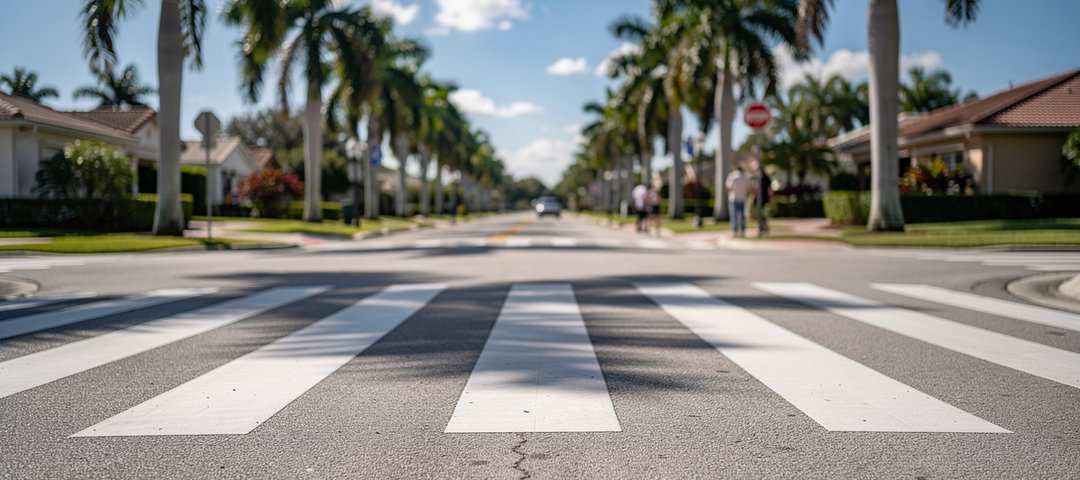
Pedestrian Safety in Coral Springs: Crosswalk Accidents and Your Rights
Coral Springs is one of the most walkable cities in Broward County. Its wide residential streets, proximity to parks, and dense mix of schools, shopping centers, and public spaces mean thousands of people walk every day — to school, to work, to Publix, or simply for exercise. That walkability is part of what makes Coral Springs such a desirable community.
But it also means pedestrians share roads with heavy vehicle traffic at dozens of intersections where the risk of a serious collision is real. Pedestrian-vehicle accidents are among the most devastating scenarios in personal injury law. A vehicle — even one moving at moderate speed — transfers enormous force to an unprotected person. The resulting injuries are frequently catastrophic, and the path to recovery is long and expensive.
If a vehicle has struck you as a pedestrian in Coral Springs or anywhere in Broward County, you have rights under Florida law. HLM Injury Lawyers, led by attorney Eric A. Hernandez, represents pedestrian accident victims throughout South Florida and fights to secure the full compensation they deserve.
High-Risk Areas in Coral Springs
Coral Springs has several corridors and intersections where pedestrian traffic is heavy and accident risk is elevated. Three stand out:
- Sample Road: One of Coral Springs’ primary east-west arteries, Sample Road carries heavy commuter and commercial traffic all day. Pedestrians crossing at mid-block points or at intersections with incomplete crossing signals face significant exposure. Higher speed limits and frequent turns make driver attentiveness essential — and not always present.
- University Drive: Running north-south through the heart of Coral Springs, University Drive is lined with shopping centers, medical offices, restaurants, and schools. The volume of turning vehicles, combined with pedestrians entering and exiting businesses, creates multiple conflict points. Drivers focused on finding parking or making turns often fail to scan for pedestrians in crosswalks.
- Atlantic Boulevard: Another major corridor connecting Coral Springs to neighboring cities, Atlantic Boulevard sees pedestrian traffic surge near school zones and parks — particularly in the morning and afternoon — and drivers used to higher speeds may not adjust quickly enough.
These are not the only dangerous locations. Any intersection — signalized or not — where pedestrian and vehicle paths cross carries inherent risk when a driver is distracted, impaired, or simply not paying attention.
Florida Pedestrian Right-of-Way Law
Florida law gives pedestrians the right of way in crosswalks—both marked and unmarked. When a pedestrian steps into a crosswalk at an intersection, approaching vehicles are required to yield. This right of way applies at signalized intersections and at mid-block crosswalks where signs are present.
Drivers must exercise due care to avoid colliding with a pedestrian in any situation, regardless of who technically has the right of way. Florida law imposes an affirmative duty on drivers to stay alert to pedestrians and take reasonable precautions.
That said, pedestrians also have duties. They must use crosswalks where available, obey pedestrian signals, and avoid stepping suddenly into the path of a vehicle so close that the driver cannot yield in time. Pedestrian right-of-way is a legal standard — but it does not suspend the laws of physics.
Common Causes of Pedestrian Accidents
Most pedestrian crashes are caused by driver error, not pedestrian behavior. The most common causes include:
- Distracted driving: A driver checking a phone, adjusting the radio, or turning to a passenger may not notice a pedestrian in or near a crosswalk until it is too late. At 30 miles per hour, a car travels about 44 feet per second — a brief distraction can be the entire distance between a pedestrian and impact.
- Failure to yield at intersections and crosswalks: Drivers turning right on red often focus on oncoming traffic and fail to check for pedestrians crossing in front of them. Left-turning drivers face the same challenge.
- Speeding: Excessive speed cuts stopping distance and reaction time. It also dramatically increases injury severity when a collision occurs.
- Impaired driving: Alcohol and drug impairment remain significant factors in pedestrian fatalities, particularly at night.
- Failure to see pedestrians in low light: Early morning and evening hours — especially during Florida’s shorter winter days — reduce driver visibility. Pedestrians not wearing reflective materials are especially vulnerable.
Common Injuries in Pedestrian-Vehicle Accidents
Because pedestrians lack any protective barrier, the injuries that result from a vehicle strike are typically severe:
- Traumatic brain injury (TBI): Even a glancing impact can throw a pedestrian’s head against the vehicle, the road surface, or a nearby object. A TBI can range from concussion to severe cognitive impairment.
- Spinal cord injuries: The force of a vehicle impact can fracture vertebrae and damage the spinal cord, with consequences ranging from chronic pain to paralysis.
- Fractures: Leg and hip fractures are extremely common in pedestrian accidents. The vehicle typically strikes the lower body first, and victims often also fracture outstretched arms in the fall.
- Internal organ damage: Blunt force trauma to the torso can rupture organs without obvious external injury.
- Soft tissue injuries: Even in lower-speed impacts, ligament and muscle damage can cause long-term pain and functional limitations.
- Lacerations and road rash: Contact with the vehicle and road surface frequently causes significant cuts, abrasions, and scarring.
Comparative Negligence in Pedestrian Accident Cases
Florida’s modified comparative negligence rule applies to pedestrian cases. If you were jaywalking — crossing outside a crosswalk where one was available — an insurer or defense attorney may argue your own conduct contributed to the crash. The same argument may follow if you crossed against a signal.
Under Florida law, if you are found 51% or more at fault for the accident, you cannot recover. If you are less than 51% at fault, your recovery is reduced in proportion to your share of fault.
Contributory conduct does not eliminate a claim — it reduces it. And an attorney can often challenge inflated fault allocations. Crossing against a light does not excuse a driver who was texting. Jaywalking does not justify a driver speeding through a school zone.
The key is a thorough investigation and experienced legal representation before you accept any assignment of fault from an insurance company.
The Statute of Limitations
In Florida, you have two years from the date of a pedestrian accident to file a personal injury lawsuit, under HB 837 (Florida’s 2023 tort reform law), which reduced the prior four-year period. This deadline applies even if you are still recovering and have not determined the full extent of your damages. Wait too long — even with reasonable intentions — and you can permanently bar your right to recover.
If a pedestrian accident results in a fatality, surviving family members may have a wrongful death claim. Florida’s wrongful death statute of limitations is also two years.
Why Legal Representation Matters in Pedestrian Cases
Pedestrian accident claims often involve significant medical expenses and long-term care needs. Insurance companies — particularly the at-fault driver’s liability insurer — have a financial incentive to minimize payouts. They may try to shift blame to the pedestrian, challenge the severity of injuries, or use a victim’s recorded statement against them.
Attorney Eric A. Hernandez is a former Assistant U.S. Attorney for the Southern District of Florida who clerked for Chief Justice Charles T. Wells of the Florida Supreme Court. With more than 25 years of trial experience and admission to the U.S. Supreme Court Bar, Eric brings deep legal experience to every pedestrian accident case he handles. He is fluent in English and Spanish and serves clients throughout Coral Springs, Parkland, Coconut Creek, Margate, Tamarac, Pompano Beach, and Broward County.
HLM Injury Lawyers handles pedestrian accident cases on a contingency fee basis. You pay nothing unless we win.
Contact HLM Injury Lawyers — Free Consultation
If you or a family member has been injured as a pedestrian, call HLM Injury Lawyers at (305) 842-2100 for a free consultation. Do not wait — your case and your rights are time-sensitive.