
Summer Driving in South Florida: DUI, Tourist Traffic, and Accident Risks
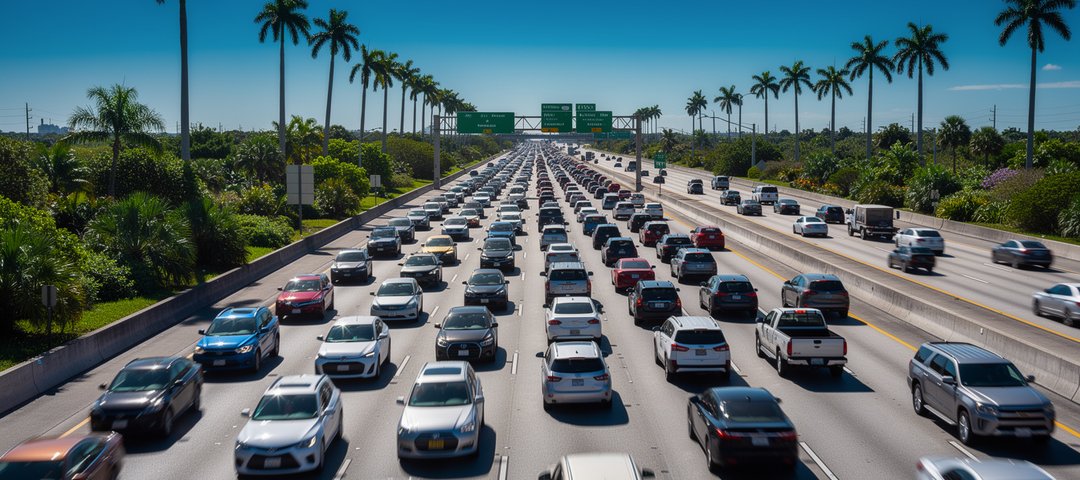
Summer in South Florida means more than heat and afternoon thunderstorms. It means a sharp surge in vehicle traffic — beach-goers, families on vacation, out-of-state visitors, and seasonal residents returning for extended stays. The roads Broward County residents drive every day grow more crowded, more unpredictable, and more dangerous from Memorial Day through Labor Day.
Understanding the risks that peak during summer — and knowing what to do if you are in an accident — puts you in the best position to protect yourself, your family, and your legal rights.
HLM Injury Lawyers serves accident victims throughout Coral Springs, Parkland, Coconut Creek, Margate, Tamarac, Pompano Beach, and all of Broward County. If you have been injured in a summer-season crash, call (305) 842-2100 for a free consultation.
The Summer Traffic Surge
Florida’s highway and roadway system absorbs significant additional volume every summer. I-95 through Broward County, the Florida Turnpike, US-1, and beach-access corridors all see elevated traffic counts.
The problem is not just volume — it is the mix. Visitors from other states do not know South Florida’s road layouts, interchange configurations, or local driving conventions. A tourist driving a rental car on I-95 for the first time may brake unexpectedly, miss exits at the last moment, or fail to anticipate how quickly traffic speeds and patterns shift. Unfamiliarity with the roads is a genuine accident risk factor, distinct from simple negligence.
Add summer’s intensified afternoon storms — which can cut visibility to near-zero within minutes — and roads residents consider routine become significantly more hazardous.
DUI Risk Spikes in Summer
Alcohol- and drug-impaired driving is a year-round problem, but summer conditions amplify the risk. Beach bars, rooftop restaurants, Fourth of July celebrations, and an overall rise in social gatherings put more impaired drivers on South Florida roads — particularly in the late evening and overnight hours.
A driver who causes a crash while impaired faces both criminal and civil consequences. From a personal injury standpoint, impaired driving typically establishes clear negligence, and in cases of particularly egregious conduct, Florida law may allow the pursuit of punitive damages beyond standard compensatory recovery.
If a driver you suspect was impaired strikes you:
Do not confront the driver. Your safety is the priority.
Call 911 immediately. A responding officer can conduct a DUI investigation at the scene. The police report and any DUI-related charges will be highly relevant to your civil claim.
Note your observations. Slurred speech, the smell of alcohol, the driver’s behavior before and after the crash — record all of these details.
Ask the officer to document everything. If a DUI arrest is made, that record will be a significant asset in your injury case.
What Happens When an Out-of-State Driver Hits You
One of the most common scenarios during Florida’s summer tourist season is a crash caused by an out-of-state driver. Rental cars are everywhere. Visitors from states with different traffic laws, driving cultures, and insurance requirements share Broward County’s roads with residents every day.
Several important points apply when an out-of-state driver is at fault:
Their liability coverage applies. Auto liability insurance generally follows the vehicle. If an out-of-state driver who caused your crash carries bodily injury (BI) liability coverage, you can make a claim against their policy. Whether their home state’s requirements or Florida’s govern that coverage may affect the available limits.
Florida does not require bodily injury liability coverage. Florida is one of the few states that does not require drivers to carry BI liability insurance. If the out-of-state driver’s home state requires BI coverage — as most do — that coverage may be the source of your recovery.
- Rental car coverage: If the driver was in a rental vehicle, the rental company may have provided liability coverage through the rental agreement, or the driver may have used a personal auto policy or credit card benefit. Investigating the available coverage is an early priority.
- Uninsured/underinsured motorist (UM/UIM) coverage: If the at-fault driver had no coverage or too little, your own UM/UIM coverage — if you carry it — becomes critically important. Because Florida does not require BI coverage, this is one of the strongest reasons to carry robust UM/UIM coverage.
Beach Traffic and Coastal Road Risks
Broward County’s coastal roads carry some of their highest traffic volumes on summer weekends. A1A, Sunrise Boulevard, and commercial corridors near Fort Lauderdale Beach and Pompano Beach see heavy pedestrian crossings, cyclists, scooters, and vehicle traffic competing for limited road space.
Pedestrian crossings near beach access points are particularly high-risk. Visitors focused on finding parking, checking their phones, or navigating unfamiliar intersections may not notice pedestrians stepping into crosswalks. Cyclists sharing the road with distracted summer drivers face heightened risk. And the mix of congestion and impatience often produces aggressive lane changes and unsafe passing.
The Florida Statute of Limitations — Two Years From the Accident
No matter what time of year your accident occurs, Florida’s statute of limitations for personal injury claims is two years from the date of the crash, under HB 837 (Florida’s 2023 tort reform law), which reduced the prior four-year period. This deadline applies whether the at-fault driver was a Florida resident or a tourist from out of state.
Do not assume that tracking down an out-of-state driver or locating their insurer justifies waiting to start your claim. An attorney can handle the investigation and find the relevant parties — but the clock starts on the date of the accident.
Safety Tips for Summer Driving in South Florida
While you cannot control other drivers, you can reduce your own risk:
Increase your following distance. When roads are crowded and drivers are unpredictable, extra space to react is your best protection.
Be especially cautious in beach corridors and tourist-heavy areas. Drivers in these zones are more likely to brake suddenly, make unexpected turns, or fail to yield.
Stay alert during and after afternoon storms. Wait them out when possible; if you must drive, reduce speed and increase following distance significantly.
Avoid driving late at night near entertainment districts. DUI risk peaks in the late evening and early morning hours on weekends.
Check your UM/UIM coverage. Summer is a good time to review your auto insurance and confirm you carry adequate uninsured motorist protection.
Contact HLM Injury Lawyers — Free Consultation
Have you been injured in a summer crash in South Florida? Call HLM Injury Lawyers at (305) 842-2100 for a free consultation. Attorney Eric A. Hernandez serves Coral Springs, Parkland, Coconut Creek, Margate, Tamarac, Pompano Beach, and all of Broward County — no fee unless we win.