
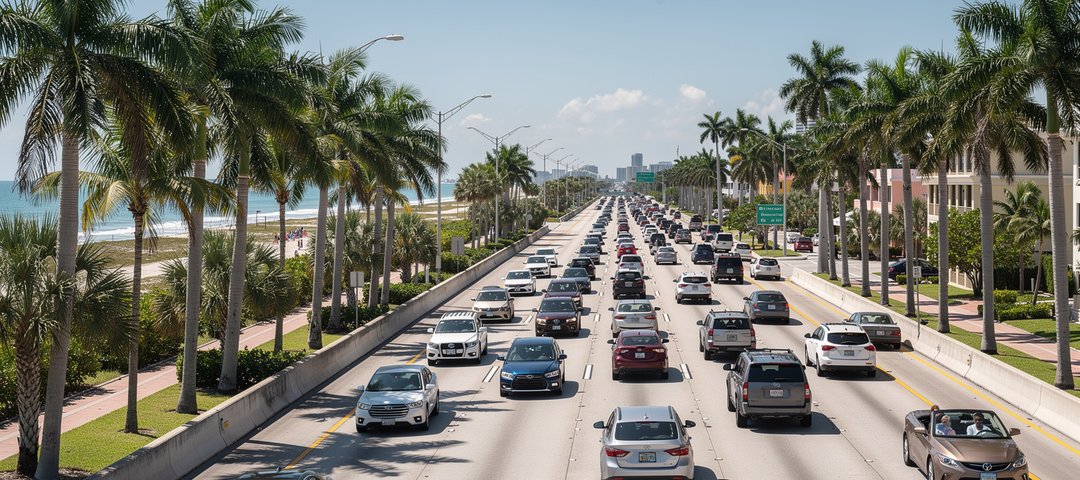
Spring Break Driving Safety in South Florida: Avoiding Accidents
Every year, spring break transforms South Florida’s roads, beaches, and entertainment corridors into a high-traffic, high-energy environment that presents real driving risks for year-round residents and visitors alike. Broward County — including Coral Springs, Coconut Creek, Pompano Beach, and the beach communities along A1A — sees a significant increase in vehicle volume during spring break weeks, along with a corresponding spike in the behaviors that cause accidents: distracted driving, impaired driving, unfamiliarity with local roads, and pedestrian activity in places that are usually less congested.
If you live in or drive through South Florida during spring break, understanding the specific risks this period creates helps you drive more defensively — and helps you recognize what to do if an impaired or distracted driver puts you at risk.
The Traffic Surge and What It Means for Broward Roads
Spring break draws visitors to Broward County from across the country and internationally. That visitor traffic concentrates on specific corridors: A1A and Fort Lauderdale Beach, Las Olas Boulevard, the Sawgrass Expressway connecting I-75 to I-95, and the arterials feeding into beach communities from the western suburbs.
For Coral Springs residents commuting east or heading toward beach areas, spring break brings conditions that differ significantly from the rest of the year. Rental car drivers unfamiliar with local road patterns. Out-of-state vehicles operating under different assumptions about right-of-way, speed, and lane discipline. Navigation-dependent drivers making last-minute lane changes and turns.
The Sawgrass Expressway is particularly affected. As the primary connector between western Broward County communities and the coast, it handles substantial spring break traffic volume in addition to its normal commuter load. Merge points and ramp areas that are manageable during off-peak periods become compressed and unpredictable during spring break.
DUI Risk During Spring Break
Impaired driving is a documented concern during spring break periods in Florida. Alcohol-related crash rates increase during extended holiday periods and in areas with concentrated entertainment activity. In Broward County, the beach areas, downtown Fort Lauderdale, and the entertainment districts in Coral Springs and Coconut Creek all see elevated nightlife activity during spring break.
The risk is not limited to late-night hours. Extended day drinking at beach events, afternoon happy hours, and all-day gatherings mean impaired drivers can be on the road when you least expect them.
Drive defensively on every road during spring break:
- Increase your following distance: allow more room than usual between your vehicle and the car ahead, particularly on unfamiliar drivers’ routes.
- Be cautious near beach approaches: roads leading to and from beach areas and entertainment districts carry heightened impaired driving risk in evenings and late afternoons.
- Watch for erratic behavior: unusual lane changes, inconsistent speed, late braking, and failure to maintain lane position are all signs of potential impairment. Increase your distance and do not attempt to pass.
Pedestrian and Bicycle Safety
Pedestrian activity surges during spring break in South Florida. Beach visitors walking between accommodations and the shore, cyclists on the beach path, and groups moving between entertainment venues create pedestrian conflicts that are less common during non-peak periods.
Crosswalk compliance — both by drivers and pedestrians — is more variable during high-activity periods. Jaywalking increases. Distracted pedestrians looking at their phones step into travel lanes. Groups crossing at mid-block locations create sudden hazard situations.
If you are driving near beach areas, entertainment districts, or hotel corridors during spring break, slow down and increase your scan distance. Pedestrians may enter your path from between parked vehicles with minimal warning.
Safety Tips for Spring Break Driving in South Florida
A few practical adjustments to your driving behavior during spring break weeks can meaningfully reduce your risk.
- Allow extra travel time: Traffic volume increases significantly during peak spring break periods. Building additional time into your travel reduces the pressure to speed or make aggressive lane changes.
- Use alternate routes where possible: If your route typically takes you through high-traffic beach or entertainment corridors during spring break peak hours, consider alternatives that add a few minutes but reduce your exposure to the most congested areas.
- Avoid peak evening hours near entertainment districts: The hours between 10 p.m. and 2 a.m. near entertainment districts carry the highest impaired driving risk during spring break. If you can shift your timing, do so.
- Stay attentive at intersections: Spring break drivers unfamiliar with local signal timing may run red lights or make aggressive turns. Pause and check cross-traffic before proceeding on a green.
If a Spring Break Driver Injures You
If you are injured by an impaired or distracted driver during spring break, the legal process is the same as any other Florida car accident — but there are specific elements to document.
- Call 911: An impaired driver should be reported immediately. Law enforcement can conduct field sobriety testing and document evidence of impairment in the police report — evidence that is highly relevant to your claim.
- Note the driver’s behavior: Document any observable signs of impairment — slurred speech, unsteady gait, smell of alcohol — while they are still present, and make sure responding officers are aware.
- Seek medical care within 14 days: Florida’s PIP 14-day treatment requirement applies regardless of the circumstances of the crash.
- Contact an attorney: If the at-fault driver is a visitor with out-of-state insurance, the claims process may involve out-of-state insurers and additional complexity that an experienced attorney can handle.
Protecting Yourself Before You Leave the Driveway
The best spring break safety measure you can take happens before you start the car. Check your vehicle — tires, lights, and brakes — and confirm that your auto insurance is current and adequate. Review your UM/UIM coverage limits. If you carry only the Florida minimum, understand that a serious accident with an uninsured tourist driver may leave you without adequate compensation.
If you are heading toward beach areas or entertainment districts during spring break evenings, consider rideshare instead of driving. The combination of elevated DUI risk and high pedestrian activity near those corridors makes it one of the higher-risk driving environments in South Florida during this period.
Contact HLM Injury Lawyers — Free Consultation
If you were injured by an impaired or reckless driver during spring break in South Florida, HLM Injury Lawyers can help. Attorney Eric A. Hernandez offers free consultations and serves injured clients throughout Broward County. Call (305) 842-2100 to discuss your claim.