
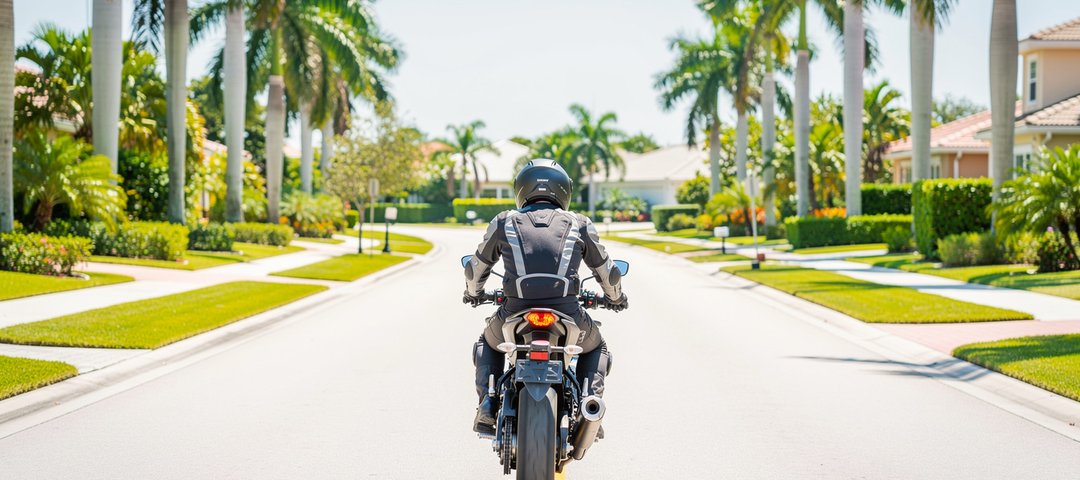
Motorcycle Accident Season in Florida: Riding Safe This Spring
Spring in South Florida means warming roads, lighter weekday traffic, and a surge of motorcycles on the road. Broward County riders know the feeling — warm air, open stretches along US-1 or the Sawgrass Expressway, and the freedom that draws riders back after winter. But more bikes mean a higher risk of serious crashes. Motorists who spent months ignoring motorcycles in traffic are suddenly sharing lanes again, and not everyone adjusts.
Florida consistently ranks among the states with the highest motorcycle fatality rates in the country — and that is not a coincidence. Year-round riding weather, heavy tourist traffic, and high-speed corridors put riders at constant risk, and spring is when those risks intensify. Riders who understand what triggers motorcycle crashes — and what their rights are when someone else’s negligence causes a collision — are better positioned to protect themselves on and off the road.
If you or someone you love has been injured in a motorcycle crash in Coral Springs, Parkland, Margate, or anywhere in Broward County, HLM Injury Lawyers is here to help. Attorney Eric A. Hernandez has more than 25 years of trial experience and is ready to evaluate your case at no cost to you.
Why Spring Brings More Motorcycle Crashes
The seasonal uptick in motorcycle accidents is not random. Several factors converge each spring to increase crash risk across South Florida.
- Driver inattention: After months of winter traffic with fewer bikes on the road, many drivers stop actively scanning for motorcycles. They check mirrors designed for cars, not for riders. A motorcycle occupies a fraction of the visual field a car does, and an inattentive driver can miss it entirely — especially at intersections or when merging onto highways.
- Failure to yield: A large share of motorcycle crashes involve a vehicle turning left across a motorcycle’s path. The driver fails to see the approaching rider, misjudges speed, or simply does not yield. These collisions often happen at moderate speeds but produce catastrophic injuries because the motorcyclist has no surrounding structure to absorb the impact.
- Unsafe lane changes: When a driver changes lanes without checking blind spots, a motorcyclist riding legally in the adjacent lane can be forced off the road or struck directly. This is especially common on I-95 and the Florida Turnpike during peak commute hours and tourist-heavy spring weekends.
- Distracted driving: Phones, GPS devices, and in-car entertainment systems pull driver attention off the road. For motorcyclists, even a two-second lapse can be the difference between a near-miss and a catastrophic crash.
- Road hazards: Spring also brings rain, and Florida’s afternoon storm season ramps up in late April and May. Sand, gravel, oil patches, and standing water are far more dangerous to motorcycles than to cars. A pothole that barely rattles a sedan can throw a rider from the bike.
Florida Helmet Law — What Riders Should Know
Florida does not require all riders to wear helmets. Whether the law requires a helmet depends on factors including age and insurance coverage. Because those requirements carry nuances that affect how fault and comparative negligence are analyzed in a crash claim, discuss your situation with an attorney before assuming your helmet status affects your right to recover compensation.
What is clear: wearing a helmet sharply reduces the risk of traumatic brain injury (TBI) in a crash. If you ride, wear one. The best rider protection is not legal — it is physical.
Rider Rights After a Crash — What You Need to Know
Florida law treats motorcyclists the same as other motor vehicle operators in their right to pursue compensation after a crash caused by another driver’s negligence. But motorcycle cases carry unique challenges riders should understand.
- The serious injury threshold: Florida’s no-fault auto insurance system covers the initial medical costs for car accident victims through Personal Injury Protection (PIP) coverage — but motorcycles are generally not required to carry PIP. As a result, motorcycle accident claims typically proceed as direct liability claims against the at-fault driver. To recover, you must establish the other driver’s fault and prove your damages.
- Comparative negligence: Florida follows a modified comparative negligence rule. If you are found 51% or more at fault for your own crash, you cannot recover compensation. If you are less than 51% at fault, your recovery is reduced in proportion to your share. Adjusters routinely try to pin partial fault on motorcyclists — arguing speed, lane positioning, or visibility — to cut what they pay. An experienced attorney can push back against inflated fault assignments.
- The statute of limitations: In Florida, you have two years from the date of your motorcycle accident to file a personal injury lawsuit, under HB 837 (Florida’s 2023 tort reform law), which reduced the prior four-year period. Do not wait. Evidence deteriorates, witnesses move on, and delay weakens your case.
- Evidence that matters: The most valuable evidence after a crash includes the police report, scene photographs, witness contact information, any available dashcam or traffic camera footage, and complete medical records from your treatment. If the at-fault driver was cited for a traffic violation, that citation is directly relevant to your claim.
Common Motorcycle Crash Injuries
Motorcyclists are uniquely vulnerable. Without the protection of an enclosed vehicle, riders absorb the full force of impact. Common injuries include:
- Traumatic brain injury (TBI): Even with a helmet, the brain can sustain serious injury from the rotational and impact forces of a crash. TBI symptoms — including cognitive difficulties, mood changes, and headaches — may take days or weeks to appear.
- Road rash: Sliding across pavement at speed strips skin and can cause deep tissue damage, permanent scarring, and serious infection risk.
- Spinal cord and back injuries: Herniated discs, fractures, and in the most severe cases, partial or complete paralysis.
- Fractures: Arms, legs, collarbones, and pelvis are frequently broken when a rider is thrown from the bike.
- Internal injuries: Blunt force trauma to the torso can damage organs in ways that are not immediately visible.
Florida’s serious injury threshold lets victims step outside no-fault and pursue full compensation for a significant or permanent injury, significant scarring or disfigurement, or death. Most motorcycle accident injuries meet this threshold.
Spring Safety Tips for Broward County Riders
Knowing the risks is only half the equation. These habits reduce crash risk every time you ride:
- Wear full protective gear: Helmet, gloves, jacket, and boots — even in warm weather. Gear is your last line of defense.
- Increase your visibility: Keep your headlight on at all times, choose bright or reflective gear, and position yourself in the lane where surrounding drivers can see you.
- Anticipate intersections: Most serious motorcycle crashes happen at intersections. Slow down, scan for cross traffic, and never assume a turning driver sees you.
- Maintain a safe following distance: Stopping distance on a motorcycle differs from a car. Give yourself room to react.
- Be especially cautious after rain: The first fifteen minutes of rain bring oil residue to the surface, making roads slicker than they will be once the rain washes it away.
When to Call an Attorney
If another driver’s negligence injured you in a motorcycle crash, you have the right to pursue compensation for medical bills, lost wages, pain and suffering, and other losses. Insurance companies — including the at-fault driver’s insurer — will work to minimize what they pay you. An attorney in your corner levels the playing field.
Attorney Eric A. Hernandez is a former Assistant U.S. Attorney for the Southern District of Florida who has spent more than 25 years fighting for injury victims throughout Broward County and South Florida. He is fluent in English and Spanish and handles motorcycle accident cases on a contingency basis — no fee unless we win.
Contact HLM Injury Lawyers — Free Consultation
Questions about your motorcycle accident claim? Call HLM Injury Lawyers at (305) 842-2100 for a free consultation. We serve Coral Springs, Parkland, Coconut Creek, Margate, Tamarac, Pompano Beach, and all of Broward County.