Halloween Safety: Pedestrian Accidents Spike in October
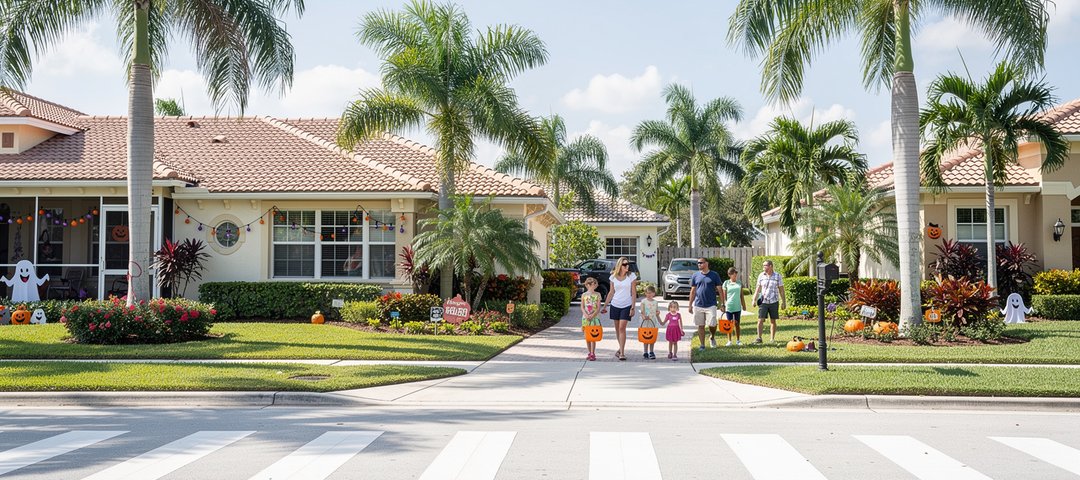
Halloween should be one of the most joyful nights of the year for children and families across South Florida. Instead, it is consistently among the most dangerous nights on the road for child pedestrians nationwide. Costumes that block vision, dark streets, unfamiliar neighborhoods, and distracted drivers create a hazardous combination every October 31st. If your child — or any family member — is struck by a vehicle while trick-or-treating, you need to know your rights immediately.
Why Halloween Is Especially Dangerous for Pedestrians
Nationally, studies have found that children are significantly more likely to be struck and killed by a vehicle on Halloween than on any other night of the year. The reasons are straightforward and preventable — but prevention requires awareness from both families and drivers.
Costumes reduce visibility and restrict movement. Many costumes include masks that limit peripheral vision, long trailing fabric that creates tripping hazards, and dark colors that make children nearly invisible to drivers at night. A child who can barely see past their mask is also a child who may step into traffic without seeing an approaching car.
Unfamiliar routes. Children often trick-or-treat in neighborhoods other than their own, where they do not know the traffic patterns or busy intersections — and where drivers are less likely to expect pedestrians.
Children dart into roads. The excitement of Halloween — the next house, the candy, the friends — means children are more likely to run between cars, cross mid-block, or step off curbs without checking for traffic.
Distracted and impaired drivers. Halloween is not only a children’s holiday. Adult parties, alcohol consumption, and the general festivity of the evening mean more impaired and distracted drivers on the road precisely when children are flooding sidewalks and crosswalks.
Reduced lighting. Even neighborhoods with standard streetlights can have dark patches between homes. Children in dark costumes crossing between lit areas are nearly invisible to drivers who are not expecting them.
What Drivers Are Required to Do
Florida law imposes clear duties on drivers that apply with full force on Halloween night — and every other night.
Drivers must:
- Yield to pedestrians in crosswalks: whether marked or unmarked
- Exercise due care to avoid striking pedestrians anywhere on the roadway
- Reduce speed in residential neighborhoods with pedestrian activity
- Remain attentive and free from distraction — phones, conversation, and in-vehicle entertainment have no place on streets filled with children
A driver who strikes a child while distracted, speeding, or impaired faces civil liability for every injury that results. The fact that a child ran into the road does not automatically erase that liability — courts weigh the conduct of both parties.
Halloween Safety Tips for Families
As a community-focused firm serving Coral Springs, Parkland, Coconut Creek, and surrounding areas, we encourage every family to take simple precautions this Halloween:
- Attach reflective tape or glow sticks to costumes and treat bags — make your child visible from a distance
- Avoid all-dark costumes for nighttime trick-or-treating, or add bright accessories
- Choose face paint over masks when possible — it allows full vision and does not restrict awareness
- Carry flashlights or wear light-up accessories
- Cross only at corners and crosswalks: never mid-block
- Supervise young children directly: do not allow young children to cross streets without an adult
- Establish a route in advance and stick to well-lit, familiar streets
- Set clear rules about traffic: stop at every curb, look both ways, wait for an adult’s signal
Drivers in residential neighborhoods should slow down, watch for movement between parked cars, and expect pedestrians to appear unexpectedly — especially on Halloween.
What to Do If Your Child Is Hit
If your child is struck by a vehicle while trick-or-treating, the steps you take in the immediate aftermath matter for both their health and any future legal claim.
Call 911 immediately. Even if your child appears uninjured, some injuries — internal trauma, concussions, and soft tissue damage — do not produce immediate symptoms. Emergency medical evaluation is essential.
Do not move your child unless they are in immediate danger from traffic. Movement can worsen spinal injuries.
Get the driver’s information. Name, insurance, license plate, and driver’s license number. If bystanders witnessed the accident, get their contact information as well.
Document the scene. Photographs of the location, the vehicle, your child’s costume, and any visible injuries create a record that can be critical later.
Preserve the costume. The clothing your child was wearing — including its color and any reflective elements — may be relevant evidence.
Contact an attorney before speaking to insurance companies. Insurance adjusters for the at-fault driver may contact you quickly. You are not obligated to give a recorded statement, and doing so without legal guidance can damage your claim.
Under Florida law, you have two years from the date of the accident to file a personal injury lawsuit. If the injured victim is a minor, special rules may apply — consult an attorney to understand how the deadline works in your specific situation.
Contact HLM Injury Lawyers — Free Consultation
No family should spend the holiday season dealing with the aftermath of a preventable accident. If your child or a family member was injured in a pedestrian accident this Halloween in Coral Springs, Parkland, Coconut Creek, Margate, Tamarac, or anywhere in Broward County, HLM Injury Lawyers is here to help. Call attorney Eric A. Hernandez at (305) 842-2100 for a free consultation. We handle injury cases on a contingency basis — there is no fee unless we recover for you.